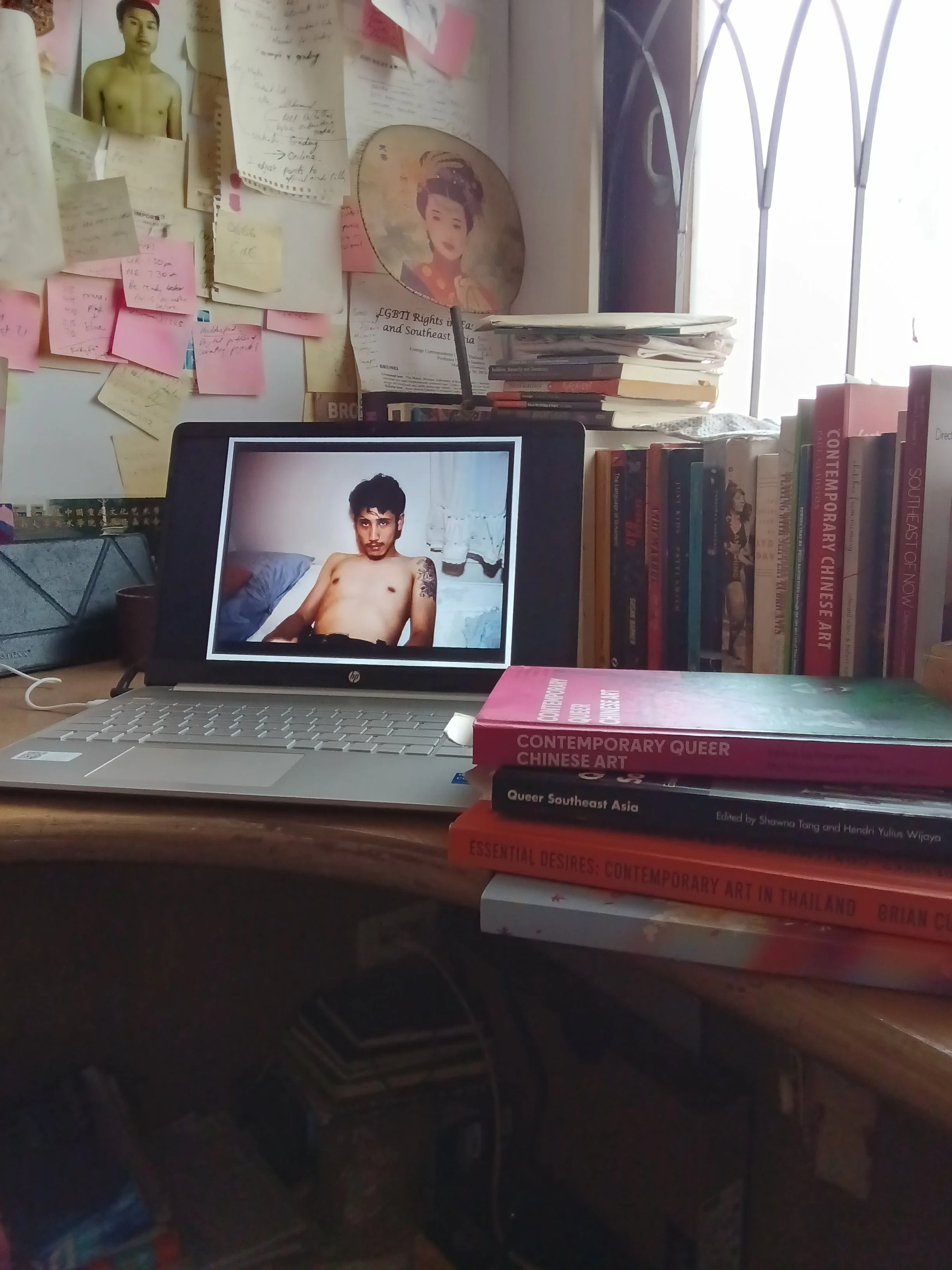
Brian is a writer, editor, and educator who trained as a visual artist, and curation is also an outcome of his research. He was part of the first generation to study for a PhD in studio art, in the UK, which was awarded by the University of Bristol in 2001. His doctoral research addressed queer-ed images of the eroticised male body, based in comparative research in art history and popular culture and the production of a series of paintings and drawings. The thesis argued for a culturally-located - – “western” – ideal of masculinity and how its normative tenets could be subverted within a politicized art practice. The research contributed to histories and theories of feminist art as an examination of cultural constructs of male sexuality and gender while employing then emergent Queer Theory.
Retaining a commitment to what has become the rubric of Queer Studies, Brian’s research continues to examine cultural framings of the sexuality of male bodies; ideas and ideals of representation; critical histories of modern and contemporary art, and framings of visual culture per se. Research publications include a study of the Euro-centrism of early queer theories; photography and the queer sexual cultures of night-time Bangkok; how discursive binaries can seek to regulate embodied experiences of art; and comparative work on modernist-nationalist, identitarian, legacies for contemporary art. These writings have been published in volumes by Bloomsbury, Phaidon, Reaktion Books, Routledge, Wiley-Blackwell, and the journals Craft Research, Intersections: Gender and Sexuality in Asia and the Pacific, On-Curating, and Southeast of Now: Directions in Contemporary and Modern Art in Asia. His writing has been translated into many languages and is regularly taught on university curricula, internationally. He serves on the advisory board for the book series Oyster: Feminist and Queer Approaches to Arts, Cultures and Genders with DeGruyter Publishers.
Brian’s current research interests, as of 2026, are becoming honed within projects that examine the non-universal character of “queer” and its intersections with regional modern and contemporary art. Interested in local histories or genealogies, questions of how queer expression and identities were shaped by the evolution of modernity and the contemporary are pursued with the aim of establishing idiosyncratic conditions. This includes studies, through artists’ works, of histories of visual and material cultures, such as decoration, that can be linked to recent theories of deprovincializing and decolonializing.
*
Relocating to Thailand in 2000 to take up a lectureship in the College of Design at Rangsit University, Brian has been based full-time at the Faculty of Architecture of Chulalongkorn University since 2006. Core teaching areas are art histories, visual culture, and academic writing. He has also taught courses in visual communication and drawing.
Brian’s teaching practice has been broadly based in critical issues of context, research method, and the use of theories as non-didactic. Students are encouraged to think in detail and exhaust ideas. Across both lecture- and studio- based courses, the production of questions is key: teacher-led questions that lead discussion, the provocation of questions that can be asked, and student-led questions that emerge from close engagement. Students are required to examine extant understandings and note limits to these understandings. Education as life- long is instilled, and as the objectives of university education are held in view.
Other academic work includes extensive experience of the development of international curricula, organizing and chairing committees, and external examining at post-graduate level. Adjunct activities include the organizing of guest lecture programmes and facilitating professional practice for students.